
Holding Mekelle, defeating an insurgency and securing maritime access are separate strategic challenges.
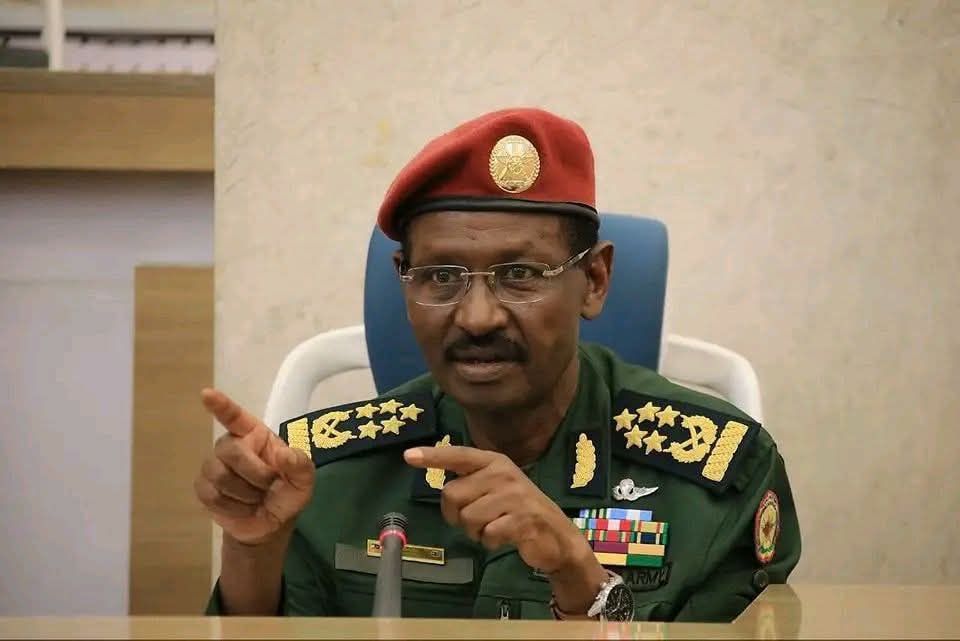
The return of Ethiopian federal forces and their allies to Mekelle has shifted the immediate military balance against the Tigray People’s Liberation Front (TPLF). The TPLF acknowledged withdrawing from the city and announced that its regional administration would operate elsewhere. Yet the loss of the capital does not necessarily mark the end of its resistance. The more consequential question is whether Addis Ababa will consolidate its gains inside Tigray or turn its attention toward Eritrea.
There is a historical warning against equating control of Mekelle with a decisive victory. Federal forces captured the city in November 2020, but Tigrayan fighters regrouped and recaptured it on June 28, 2021, seven months after their withdrawal and nearly eight months after the war began. That reversal demonstrated how quickly an apparent conventional defeat could become a prolonged insurgency and, eventually, a successful counteroffensive.
That history does not guarantee a similar outcome today. The TPLF’s prospects will depend on the cohesion of its forces, access to supplies, popular support and the federal government’s ability to hold territory. Nevertheless, Debretsion Gebremichael’s pledge to counterattack suggests that the leadership views its withdrawal as a change in military strategy rather than an acceptance of defeat. Addis Ababa could therefore face continuing resistance even after securing the regional capital.
From Former Allies to Regional Adversaries
The danger of regional escalation stems partly from the reversal of the Ethiopia–Eritrea relationship. Eritrea fought alongside Ethiopian federal forces during the 2020–2022 war, but it was not a signatory to Pretoria peace agreement that ended the conflict. Relations subsequently deteriorated over security disputes and Ethiopia’s pursuit of access to the Red Sea.
The diplomatic rupture has now narrowed the space for managing those tensions. Ethiopia closed its embassy in Asmara and expelled ten Eritrean diplomats on October 1; Eritrea responded by severing diplomatic relations. Ethiopia also expelled an Egyptian diplomat, prompting a reciprocal move by Cairo. Addis Ababa accuses Eritrea, Egypt and Sudan of supporting the opposition alliance, allegations all three countries deny.
For Ethiopia, Eritrea’s alleged involvement links an internal security challenge to an external adversary. For Asmara, Ethiopia’s maritime ambitions raise concerns about territorial sovereignty. These competing perceptions create a dangerous possibility: measures presented by one government as defensive could be interpreted by the other as preparations for war.
Assab and the Limits of Military Leverage
Ethiopia became landlocked following Eritrea’s independence in 1993. Its search for more secure maritime access has since become a central strategic concern, while Abiy Ahmed’s renewed emphasis on the Red Sea has intensified Eritrean fears that Assab could become a military objective.
One possible interpretation is that Addis Ababa hopes military pressure or a change of leadership in Asmara, would produce concessions on maritime access. However, regime change remains a hypothesis, rather than an established Ethiopian operational objective. Even if such a strategy were contemplated, there is no assurance that a successor government would accept concessions that Eritreans could regard as a surrender of sovereignty.
Egypt’s Summit Signals a Broader Contest
The October 4 summit in Egypt brought together the leaders of Egypt, Eritrea, Somalia and Sudan. Its declaration affirmed territorial sovereignty, opposed recognition of Somaliland and asserted that governance of the Red Sea belongs exclusively to littoral states. It also reiterated downstream concerns over the Nile.
Taken together, these positions can be read as a diplomatic response to Ethiopia’s ambitions across several interconnected disputes. Egypt’s concerns centre on the Nile, Eritrea’s on its coastline and security, and Somalia’s on territorial integrity. Their convergence increases diplomatic pressure on Addis Ababa, although shared concerns do not automatically amount to a unified military alliance.
A similar limitation applies to Ethiopia’s armed opposition coalition. The TPLF has joined six other groups, including Fano and the Oromo Liberation Army, in an alliance against Abiy’s government. Their common adversary may encourage tactical cooperation, but it does not by itself resolve differences over territorial claims, political representation or the future structure of the Ethiopian state.
The United States has urged Ethiopia and Eritrea to respect their neighbours’ sovereignty, exercise restraint and return to dialogue. That appeal reflects concern that renewed fighting could produce another regional military and humanitarian crisis.
The central risk is that rapid gains in Tigray could encourage Addis Ababa to overestimate what military momentum can achieve elsewhere. Holding Mekelle, defeating an insurgency and securing maritime access are separate strategic challenges. Pursuing them simultaneously could stretch Ethiopia’s resources and turn a domestic conflict into a wider confrontation. Ethiopia’s next decision will therefore matter more than the speed of its advance: whether it uses its gains to pursue a political settlement or treats them as an opening for a larger war.